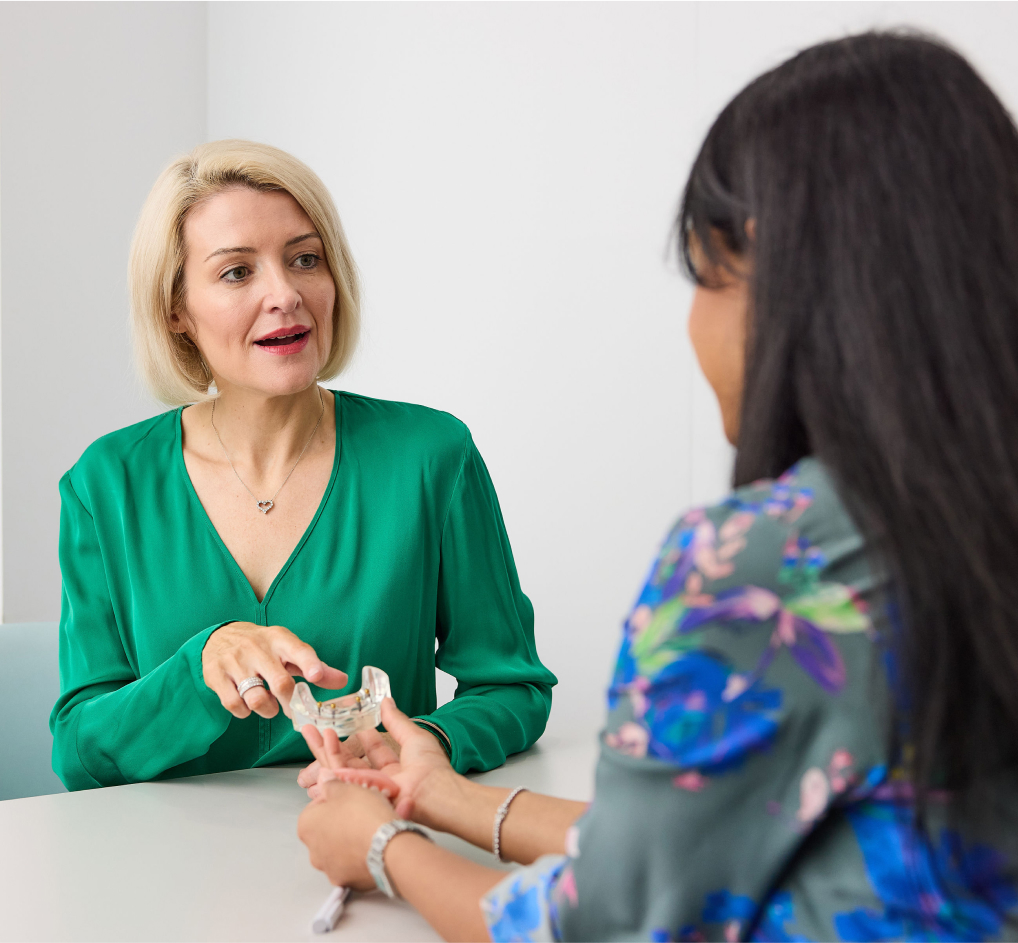
Internal Teeth Bleaching

Restore Your Smile After Root Canal Treatment with Internal Bleaching in Sydney

Tooth discolouration after a root canal is a common aesthetic concern, not a sign of treatment failure. With internal bleaching, we can restore your smile confidence and help you feel comfortable showing your teeth again.
  • High Success Rate - Research shows 85-95% of internally bleached teeth achieve a significant and satisfactory shade improvement.
  • Conservative Treatment - This technique is minimally invasive and preserves your natural tooth structure, unlike more aggressive options like veneers or crowns.
  • Targeted Whitening - It is the only method that can remove deep internal stains from blood byproducts or old filling materials, which external whitening strips cannot reach.

Has a tooth turned grey or dark after your root canal treatment? It’s a common problem, but it is one we can fix.

Internal bleaching (also known as the "walking bleach technique") safely whitens the discoloured tooth from the inside, restoring your natural smile. This gentle procedure works. It achieves an 85-95% success rate in returning teeth to their original shade, helping you smile confidently again.

Dental checkup | Endodontist Clinic Sydney

Why Do Teeth Turn Grey After Root Canal Treatment

It's a common concern when a tooth, especially a front one, starts to darken months or years after a root canal. This discolouration affects 40-60% of patients and is a predictable aesthetic issue, not a sign that your root canal has failed. Understanding why it happens is the first step to fixing it.

The Science of Post-RCT Discolouration

Several factors can cause a tooth to darken internally after endodontic treatment:

This is the most common cause. When the pulp tissue inside the tooth degenerates (either before or during the root canal), haemoglobin from the blood breaks down. These dark-coloured byproducts can penetrate the microscopic tubes in your tooth's structure (dentin tubules), creating a deep grey or brown internal stain that external whitening products cannot reach.

Some older root canal sealing materials, particularly those used 10 or more years ago, contained silver ions. Over time, these materials can migrate into the dentin, causing a gradual darkening or staining.

The removal of the pulp and blood supply causes subtle dehydration and structural changes within the dentin. This can reduce the tooth's natural light transmission, making it appear duller or more opaque than the surrounding "living" teeth.
Which Teeth Are Most Affected

Which Teeth Are Most Affected

Not all teeth have the same risk of discolouration:

  • High-Risk Teeth
    Front teeth (incisors and canines) are the most likely to show noticeable discolouration, affecting 55-65% of cases. Teeth that require a root canal due to trauma are also at higher risk because of extensive blood breakdown.
  • Lower-Risk Teeth
    Back teeth (molars and premolars) can also discolour, but it is far less noticeable as they are not prominent in your smile.

Timeline of Discolouration Development

Darkening isn't always immediate. It can follow a few different patterns:

  • Immediate (within weeks)
    Some staining may be visible quickly due to blood breakdown products.
  • Gradual (6-24 months)
    This is the most common pattern. You may notice a progressive, slow darkening over time.
  • Delayed (years later)
    Discolouration appearing many years after treatment is often linked to the migration of sealer materials.
Dentures | Endodontist Clinic Sydney

Call us today to secure your appointment.

Call us today to secure your appointment.

How Internal Bleaching Whitens Teeth From the Inside

Internal bleaching, often called the "walking bleach technique," is a proven procedure that treats tooth discolouration from within the tooth structure. It has been used successfully for over 40 years to safely whiten root canal-treated teeth. It works by addressing the internal stains that external, over-the-counter whitening products simply cannot reach.

The Walking Bleach Process

Understanding the step-by-step procedure can help demystify the treatment.

We make a small, painless opening in the back of your tooth. This is often the same access point that was used during your original root canal treatment.

A safe hydrogen peroxide gel (at a 30-35% concentration) is carefully placed inside the tooth's chamber. This gel makes direct contact with the stained dentin from the inside.

We seal the tooth with a secure temporary filling. This traps the bleaching agent safely inside.

You leave our practice and go about your normal life for 3-7 days. This is why it's called "walking bleach". You walk around while the gel works internally.

You return to our practice. We remove the gel and assess the new shade. This process is typically repeated 2-4 times until we achieve the desired level of whitening.

Once you are happy with the new shade, we permanently seal the tooth with a tooth-coloured composite resin that matches your natural smile.
Why Internal Bleaching Works Better Than External Whitening

Why Internal Bleaching Works Better Than External Whitening

Many patients ask why they can't just use whitening strips. The answer is simple: the stain is in the wrong place.

  • External Whitening (Strips, Trays)
    These products are designed to only whiten the outer enamel surface. They cannot penetrate deep enough to reach the internal dentin staining caused by a root canal. In fact, they can sometimes make the problem look worse by whitening the adjacent teeth, making the dark tooth stand out even more.
  • Internal Bleaching
    This technique treats the stain at its source, inside the tooth. The bleaching agent is placed in direct contact with the stained dentin, resulting in an 85-95% success rate for significant shade improvement.

Safety and Side Effects

Internal bleaching is a very safe procedure when performed by an experienced dental professional. It does not damage your tooth structure or affect the success of your original root canal treatment.

The potential side effects are minimal:

  • Temporary Sensitivity
    About 20-30% of patients may experience mild sensitivity, which typically resolves within a week.
  • External Root Resorption
    This is a rare complication that occurs in less than 2% of cases.
our dentists in action | Endodontist Clinic Sydney

Your Internal Bleaching Journey Timeline and Appointments

Understanding what to expect at each appointment helps you plan your schedule and feel confident about the process.
Initial Consultation and Assessment | Endodontist Clinic Sydney

Initial Consultation and Assessment

Your journey begins with a thorough evaluation to confirm that internal bleaching is the right solution for you.

  • We perform a clinical examination of the discoloured tooth.
  • An X-ray is taken to verify that your original root canal treatment is intact and healthy.
  • We use a professional shade guide to document your tooth's current colour.
  • We discuss a realistic outcome and show you the expected shade improvement.
  • You receive a detailed treatment plan and a clear cost estimate.

Treatment Appointments

We start by making a small access opening in the back of the tooth. A protective barrier is placed over your root canal filling to keep it safe. We then place the bleaching gel inside the chamber and seal the tooth with a temporary filling. You can then leave and go about your normal day while the gel works.

You will return every 3-7 days. At each visit, we remove the temporary filling, clean out the old gel, and assess the new shade. We then place fresh bleaching gel and reseal the tooth. Most patients require 2-4 of these renewal appointments to reach their optimal shade.

Once you are happy with the colour, we perform the final step. We thoroughly clean the chamber and place a permanent, tooth-coloured composite resin filling to seal the tooth. This final restoration is colour-matched to your newly whitened tooth.

Total Treatment Timeline

  • Total Duration
    3-6 weeks from start to finish.
  • Total Appointments
    4-6 visits (including consultation and final restoration).
  • Total Chair Time
    Less than 3 hours in total.
Total Treatment Timeline | Endodontist Clinic Sydney

Call us today to secure your appointment.

What Results Can You Expect Evidence-Based Outcomes

Setting realistic expectations is crucial for patient satisfaction. Here is what extensive clinical research tells us about internal bleaching outcomes.
Dental x-ray of tooth | Endodontist Clinic Sydney

Success Rate Statistics

  • Significant Improvement
    85-95% of teeth achieve a satisfactory level of whitening. This is defined as 3 or more shades lighter on a professional guide.
  • Excellent Results
    60-70% of teeth return to their natural tooth shade, matching the adjacent teeth perfectly.
  • Moderate Results
    25-30% show a noticeable improvement but don't fully match. In these cases, we may discuss combination treatments.
  • Minimal Results
    Only 5-15% of cases show limited change. This is typically due to severe staining from trauma or metallic filling materials.

Factors Affecting Success

Your likely results can be predicted by assessing a few factors:
Positive Predictors (Better Results Expected)
  • Discolouration that is less than 3 years old.
  • Staining caused by blood breakdown products (this responds best).
  • Front teeth (which allow for easier bleaching penetration).
  • Younger patients (more porous dentin structure).
Challenging Cases (Lower Success Rates)
  • Staining that is more than 10 years old.
  • Darkening caused by metal-based root canal sealers.
  • Tetracycline-stained teeth (systemic staining, not RCT-related).
  • Severe internal resorption.

Longevity of Results

A common question is, "How long will the whitening last?"

Research shows the results are very stable:

  • 5-10 years
    65-72% of patients maintain their results.
  • 10+ years
    45-55% maintain their improvement, though some gradual re-darkening can occur.

If your tooth does gradually darken again over the years, the internal bleaching procedure can be safely repeated with the same high success rate. Many patients have a single touch-up treatment 5-8 years after their first procedure to maintain a perfect shade.

Internal Bleaching | Endodontist Clinic Sydney

Comparing Internal Bleaching, Veneers, and Crowns

Several aesthetic options exist for a discoloured root canal tooth. Understanding the pros, cons, and costs of each helps you make an informed decision that aligns with your goals and budget.

Treatment Comparison

Factor Internal Bleaching Porcelain Veneer Crown
Invasiveness Minimal (small access hole in back) Moderate (enamel removal from front) High (tooth reduction all around)
Tooth Structure Preserved Maximum
(over 95%) Good
(approx. 60-70%) Moderate
(approx. 40-50%)
Treatment Time 3-6 weeks 2-3 weeks 2-3 weeks
Longevity 5-10 years (repeatable) 10-15 years 15-20 years
Aesthetic Result Natural
(your own tooth whitened) Excellent
(fully customisable) Excellent
(fully customisable)
Reversibility Reversible procedure Irreversible
(enamel removed) Irreversible
(tooth structure removed)
dental checkup | dental implants Sydney

Our Philosophy

At Australian Dental Specialists, we believe in preserving your natural tooth structure whenever possible. Internal bleaching is the most conservative approach, achieving excellent aesthetic results in 85-95% of cases. We recommend trying internal bleaching first, only moving to more invasive options like veneers or crowns if bleaching doesn't achieve your aesthetic goals.

Combination Approaches

For some patients, combining treatments achieves the optimal result:

  • For Stubborn Discolouration
    We can perform internal bleaching first to treat the deep stain, followed by external professional whitening. This whitens the adjacent teeth for a perfect colour harmony across your whole smile.
  • For Maximum Aesthetics
    After internal bleaching restores the tooth's natural base shade, a porcelain veneer can be placed. A veneer placed over a whitened tooth looks significantly more natural and vibrant than one placed over a dark, discoloured tooth.
Internal Teeth leaching | Endodontist Clinic Sydney

Post-Treatment Care and Maintaining Your Results

Proper care after internal bleaching ensures your results last as long as possible.

  • Sensitivity
    It's possible to experience temporary tooth sensitivity (20-30% of patients). If this occurs, avoid very hot or cold foods and drinks for a few days. Using a desensitising toothpaste like Sensodyne can also help.
  • Shade Settling
    Your tooth may appear slightly "over-whitened" immediately after the final treatment. This is normal and the colour will settle into its natural, stable shade within one to two weeks as the tooth rehydrates.
  • Hygiene
    You can resume your normal oral hygiene routine immediately, including brushing and flossing.

  • Oral Hygiene
    Maintain excellent care by brushing twice daily and flossing daily.
  • Check-ups
    Attend your regular 6-month dental check-ups so we can monitor your tooth and the restoration.
  • Protection
    Avoid trauma to the tooth (e.g., wear a mouthguard for contact sports) and do not smoke, as tobacco can cause new staining.
  • Re-Treatment
    If you notice gradual darkening again after 5-10 years, the procedure can be safely repeated to restore the bright shade.

While complications are rare, please contact us if you experience any of the following:

  • Severe sensitivity that lasts longer than two weeks.
  • Gum swelling near the bleached tooth.
  • Your tooth becoming loose.
  • A new pinkish discolouration appearing on the tooth.

Restore Your Smile Confidence

You do not have to live with a discoloured tooth. Our team can help you restore its natural shade. Take the first step today by booking your free, no-obligation consultation to find out if internal bleaching is right for you.

Frequently Asked Questions

Yes. A procedure called internal bleaching (or "walking bleach") is designed specifically for this. It places a whitening agent inside the tooth to remove internal stains that external strips can't reach. It has a high success rate of 85-95%.

This is common and affects 40-60% of root canal-treated teeth. It's not a sign of failure. It's usually caused by blood breakdown products from the original pulp tissue penetrating the tooth's structure. It can also be caused by older, silver-containing sealing materials migrating into the dentin over time.

Results are very stable, typically lasting 5-10 years. One study showed 65-72% of patients maintained their results for this long. If gradual darkening occurs after many years, the procedure can be safely repeated as a "touch-up" to restore the shade.

Yes, when performed by an experienced dental professional, it is a very safe procedure. It does not damage the tooth structure or the original root canal filling. The main side effect, experienced by 20-30% of patients, is temporary sensitivity that resolves within a week.

No, the procedure itself is not painful. Because the nerve has already been removed during your root canal, most patients do not require any anaesthetic. Some patients (20-30%) may feel temporary sensitivity after the appointment, similar to external whitening, but this is manageable and resolves quickly.

Yes. A very common and effective approach is to combine internal bleaching (for the dark root canal tooth) with external professional whitening (for your surrounding natural teeth). We typically perform the internal bleaching first, and once that tooth matches, we whiten the rest of your smile for a perfect, harmonious result.

No. When performed correctly, internal bleaching does not harm the tooth structure. The bleaching agent breaks down stain molecules but does not damage the enamel or dentin. We also place a protective barrier over your root canal filling to ensure the procedure only affects the stained chamber of the tooth.

In the rare 5-15% of cases where bleaching doesn't achieve the desired result (usually due to severe metallic staining), we have excellent alternative options. These include placing a porcelain veneer or a new all-ceramic crown over the tooth to provide a perfect aesthetic result.

Most patients require 4-6 appointments in total over a 3-6 week period. This includes the initial consultation, 2-4 bleaching renewal visits (each lasting 20-40 minutes), and a final appointment to place the permanent restoration.

Yes, absolutely. The procedure can be performed at any time, whether it's been weeks, years, or even decades since your root canal. Stains that are older (over 10 years) may require an extra bleaching session, but the success rates remain very high.

Yes, they are different names for the same procedure. It's called the "walking bleach technique" because the bleaching agent is sealed inside your tooth, and it works while you are "walking around" living your normal life between appointments.

Related Treatments and Information

Root Canal Treatment icon symbol | Endodontist Clinic Sydney
Root Canal Therapy
When it comes to dental services, a root canal procedure is often one of the most dreaded procedures amongst patients - however, with an experienced specialist, root canals are no worse than any other procedure.
Internal Bleaching
Intracoronal Bleaching Case Study
A bright, white smile is our best introduction. It makes us feel confident and conveys this to the world.
Cracked Teeth
Cracked Teeth
A cracked or broken tooth can cause more than discomfort — it can affect how you eat, sleep, and live day to day. Left untreated, a crack can deepen and lead to infection, swelling, and even tooth loss.

We offer timely appointments to ensure you receive the care you need when you need it. From endodontics to periodontal therapy, our specialists manage every aspect of your dental health with expertise and comprehensive post-operative support.

Your smile is our priority—experience the difference with our specialist care today.

© 2025 Australian Dental Specialists | Privacy

Site by Luna Digital Marketing