Root End Surgery
(Apicoectomy) Sydney

Root end surgery (also known as an apicoectomy) is a specialist microsurgical procedure to save your tooth when a persistent infection cannot be resolved by a traditional root canal.
  • High Success Rate - Modern apicoectomy performed by a specialist using a surgical microscope achieves a 90-95% success rate.
  • Preserves Your Crown - The procedure accesses the infection from the root tip, meaning your existing crown or bridge is not removed or damaged.
  • Fast Recovery - Most patients return to work in 1-2 days, with discomfort managed by over-the-counter pain relief.

When a non-surgical root canal cannot resolve a persistent infection at your tooth's root tip, an apicoectomy is the recommended procedure to save your tooth.

Root end surgery (or apicoectomy) is a minor surgical procedure that removes the tip of a tooth root and the surrounding infected tissue.

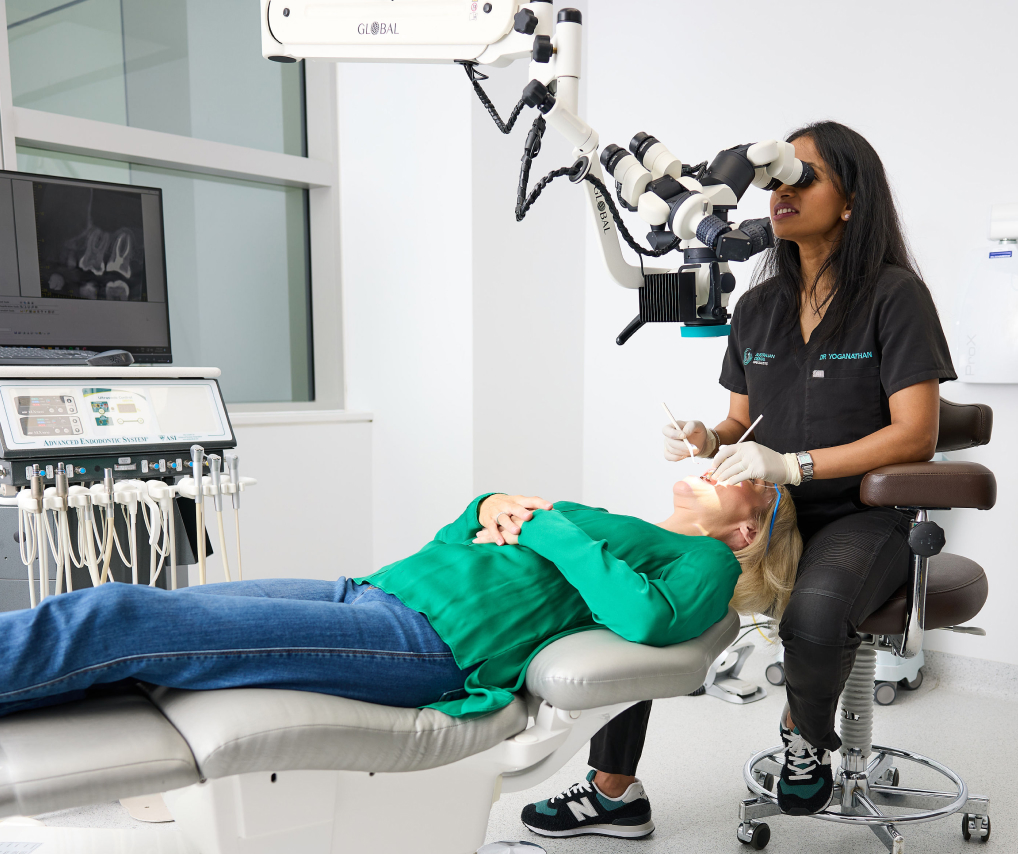
While a traditional root canal accesses the tooth from the crown (top), an apicoectomy accesses the root from the gum side. This allows our specialists to treat persistent infections that cannot be resolved through non-surgical approaches. Using a microscope, this procedure achieves superior outcomes.
Dental x-ray of tooth | Endodontist Clinic Sydney

Call us today to secure your appointment.

Call us today to secure your appointment.

When Is Surgery

Root end surgery becomes the recommended treatment in specific situations where non-surgical approaches are not feasible or have not succeeded.
Dental x-ray of tooth | Endodontist Clinic Sydney
  • Persistent Infection After Root Canal Treatment or Retreatment 
    If infection remains at the root tip despite proper root canal treatment or retreatment, surgery provides direct access to remove the infected tissue and affected portion of the root.
  • Obstruction Preventing Non-Surgical Retreatment 
    Certain obstructions make retreatment from the crown impossible or extremely risky:

    • Separated instruments (broken files lodged in the canal).
    • Posts or cores (removing them risks tooth fracture).
    • Severe calcification (the canal is completely blocked by hardened tissue).
    • Ledges or transportations (blockages created by previous treatment).
  • Complex Root Tip Anatomy
    Some teeth have unusual anatomy at the root tip (like extra canals or 'isthmuses') that cannot be adequately cleaned from the crown approach but can be addressed surgically.
  • Crown or Restoration Cannot Be Removed
    Surgery is an option when removing an expensive crown or bridge (which is required for retreatment) would risk destroying the restoration. Apicoectomy preserves your existing dental work by treating the infection from the root end.
  • Previous Retreatment Has Failed
    If conventional retreatment was already attempted but infection persists, surgery offers an alternative approach with different access and techniques.
  • Diagnostic Purposes
    Occasionally, surgery is performed to directly examine the root tip area when the cause of persistent symptoms remains unclear. Tissue can be sent for biopsy if unusual pathology is suspected.
Dental checkup | Endodontist Clinic Sydney

The Apicoectomy Procedure

Modern apicoectomy is a precise microsurgical procedure performed under a dental operating microscope with minimal tissue trauma. Understanding each phase helps patients feel prepared and confident.

Most patients are pleasantly surprised by how comfortable and straightforward the procedure is compared to their expectations.

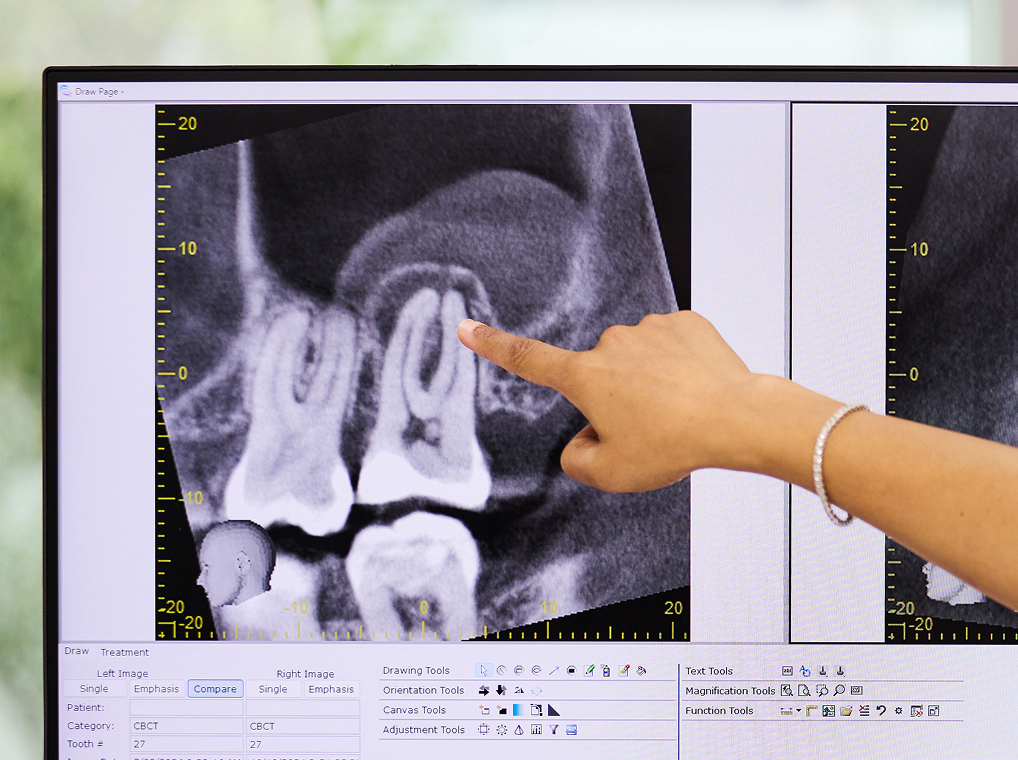
  • Comprehensive Assessment - Clinical examination, review of symptoms, and diagnostic imaging (X-rays and often 3D cone beam CT scan) determine if surgery is the appropriate solution.
  • Surgical Planning - The endodontist explains why surgery is recommended, the expected success probability, the surgical approach, recovery, and alternative options.
  • Medical History Review - We discuss medications, health conditions, and potential surgical risks. Blood thinners, bisphosphonates (medication for bone density), and certain medical conditions require special precautions.
  • Consent Process - All risks, benefits, and alternatives are thoroughly explained before you provide informed consent.

  • Local Anaesthesia. We ensure profound numbness is achieved using local anaesthetic. Most patients report feeling no pain during the procedure, just pressure and an awareness of activity.
  • Optional Sedation. Oral sedation or nitrous oxide (happy gas) is available for anxious patients. IV sedation can also be arranged.
  • Incision and Access. A small incision is made in the gum tissue overlying the infected root tip to expose the underlying bone.
  • Bone Window Creation. A small opening is made in the bone to provide access to the root tip.
  • Root Tip Removal. Using surgical microscope magnification, the infected 3-4mm of the root tip is precisely removed.
  • Root Tip Inspection. The cut root surface is examined under high magnification for cracks, missed canals, or other issues.
  • Cleaning and Preparation. The root end is cleaned, and a tiny cavity is prepared in the root tip.
  • Root End Sealing. A biocompatible material (typically MTA, a medical-grade cement) is placed to seal the root canal from the bottom, preventing future bacterial leakage.
  • Bone Graft (If Needed). If significant bone loss is present, bone graft material may be placed to encourage bone regeneration.
  • Tissue Closure. The gum tissue is repositioned and sutured with small stitches.
  • Post-Surgical Instructions. We provide detailed written and verbal instructions for your care.

  • First 24-48 Hours. Moderate swelling is expected, peaking at this time. Mild to moderate discomfort is managed with pain medication. We recommend using an ice pack.
  • Days 3-7. Swelling and discomfort gradually reduce. A suture removal appointment is typically scheduled for this time.
  • Weeks 2-6. The surface tissue healing is complete.
  • Months 3-12. Bone regeneration continues. We monitor this healing with follow-up X-rays.

Surgical microscopes provide 8-25x magnification, enabling our specialists to:

  • Visualise fine anatomical details (like cracks or extra canals) invisible to the naked eye.
  • Precisely remove only the infected portion, preserving the maximum amount of your tooth.
  • Achieve an accurate and complete seal of the root end.

Is Surgery Right for Your Case?

  • Tooth Position - Front teeth often have higher success rates than back teeth due to easier surgical access.
  • Pre-Existing Bone Loss - Cases with minimal bone loss generally have a higher success rate.
  • Presence of Fractures - An undetected vertical root fracture may mean the tooth requires extraction. Microscopic examination helps identify these cases during the procedure.
  • Surgeon Experience and Technology - Specialist endodontists using microscopes and modern sealing materials achieve significantly higher success rates.
  • Patient Compliance - Following post-surgical instructions is critical for optimal healing.
dental checkup | dental implants Sydney

Advantages and Considerations of Root End Surgery

  • Preserves Your Natural Tooth - This is the primary goal, as no replacement is as good as your own tooth.
  • Preserves Your Expensive Restoration - Your crown, bridge, or post does not need to be removed or damaged.
  • Addresses Problems Unreachable Non-Surgically - It provides direct access to the root tip to treat infections or anatomy that cannot be reached from the crown.
  • High Success Rate - The 90-95% success rate with microsurgical techniques provides a predictable, long-term solution.
  • Definitive Diagnosis - Direct examination can identify previously undetectable fractures.

Limitations and Considerations

  • Surgical Nature - This is a surgical procedure that requires a healing period. Post-operative swelling and discomfort are normal.
  • Not Always Successful - While success rates are high, approximately 5-10% of cases may not heal successfully.
  • Anatomical Access Limitations - Some teeth may not be surgically accessible if they are too close to critical structures like nerves or sinuses.
  • Post-Surgical Restrictions - The first few days require activity modification and a soft diet.
  • Not Suitable for All Cases - Teeth with severe vertical root fractures or inadequate bone support may require extraction.
dental checkup | dental implants Sydney

Take the Next Step

If you have been told you need root end surgery, or if persistent infection remains after root canal treatment, a specialist evaluation will determine if microsurgical treatment can save your tooth.

Recovery and Aftercare from Root End Surgery

Immediate Post-Surgical Care (First 48 Hours)
Understanding recovery expectations helps patients heal optimally.
  • Pain Management - We recommend a schedule of over-the-counter pain medication. Begin medication before the anaesthetic wears off.
  • Swelling Management - Use an ice pack (15 minutes on, 45 minutes off) for the first 6-12 hours. Sleep with your head elevated.
  • Bleeding Control - Gentle pressure with gauze can be used for minor oozing. Avoid spitting or drinking through a straw for the first 24 hours.
  • Eating and Drinking - Have cold, soft foods only (like yogurt or smoothies) for the first 24 hours. Do not have hot foods or drinks.
  • Oral Hygiene - Do not brush the surgical site for the first 24 hours. We recommend gentle warm saltwater rinses after 24 hours.
  • Activity Restrictions - Rest on the day of surgery. Avoid strenuous exercise for 3-4 days. Do not smoke, as it significantly impairs healing.

Comparing Treatment Options

Treatment Option Outcome
Root End Surgery Saves your natural tooth. Preserves your existing crown.
Root Canal Retreatment + New Crown Non-surgical alternative, but requires destroying and replacing the crown.
Extraction + Dental Implant Loses your tooth. Higher cost and a 6-12 month treatment timeline.

Frequently Asked Questions

An apicoectomy (or root end surgery) is a minor surgical procedure that removes the infected tip (apex) of a tooth root and seals the end of the root canal from the bottom. It is performed when conventional root canal treatment cannot resolve a persistent infection.

During the surgery, you will be completely numb and should not feel pain. After surgery, expect mild to moderate discomfort for 2-4 days, which is well-managed with over-the-counter pain relievers.

Most patients return to work within 1-2 days and light physical activity in 3-5 days. Sutures are typically removed after 7-10 days. The bone will continue to heal internally for 6-12 months.

For most patients, yes. It has a 90-95% success rate with microscopic techniques and saves a tooth that would otherwise require extraction. The cost is significantly less than an extraction and dental implant replacement.

Microscopic apicoectomy performed by a specialist endodontist has a 90-95% success rate at 5-year follow-up. This is much higher than traditional techniques without a microscope.

For further reading on the research, learn more at "Clinical case study: periapical healing."

Eat cold, soft foods only for the first 24 hours (e.g., yogurt, smoothies). Do not have hot foods or drinks. Chew on the opposite side of your mouth for the first week.

The procedure typically takes 60-90 minutes, depending on the tooth's location and complexity. It is a single-visit procedure.

A root canal is non-surgical and cleans the canals from the inside of the tooth (through the crown). An apicoectomy is surgical and accesses the root tip from the outside (through the gum) to seal it.

Yes, 5-10% of microscopic apicoectomies can fail. This is most commonly due to an undetected root crack or poor healing. If it fails, the next step is usually extraction.

Yes, most Australian private health insurance policies provide partial coverage under "Major Dental" or "Specialist Endodontics," subject to your policy's waiting periods and annual limits.

Yes, if you only had a local anaesthetic, you can drive home. If you had any form of sedation, you CANNOT drive and must have a responsible adult escort you home.

An apicoectomy is recommended if: (1) a blockage (like a post or broken file) prevents retreatment, (2) previous retreatment has already failed, or (3) you have an expensive crown you want to preserve.

This is rare (less than 1%) but is a possibility for lower back teeth near the main jaw nerve. We use a pre-surgical 3D (CBCT) scan to precisely map the nerve's location and plan the surgery safely to minimise this risk.

Yes. This is a major advantage of the procedure. The apicoectomy is performed at the root tip, leaving your existing crown completely intact.

Related Treatments and Information

Root Canal Retreatment art icon | Periodontist Clinic Sydney
Root Canal Retreatment
Root Canal Retreatment Root canal retreatment is a specialist procedure to fix a failed root canal, providing a second chance to save your natural tooth.
Cracked Teeth art icon | Periodontist Clinic Sydney
Cracked Teeth
A cracked tooth is when damage causes a small break or fracture in the tooth, which can range from small craze lines in the enamel to a split that runs below the gum line.

We offer timely appointments to ensure you receive the care you need when you need it. From endodontics to periodontal therapy, our specialists manage every aspect of your dental health with expertise and comprehensive post-operative support.

Your smile is our priority—experience the difference with our specialist care today.

Our Location
  • Suite 219, 4 Columbia Court Norwest, Sydney, NSW 2153
  • Monday - Friday: 8:30am-5:00pm,
    Weekends by appointment

© 2026 Australian Dental Specialists | Privacy

Site by Luna Digital Marketing