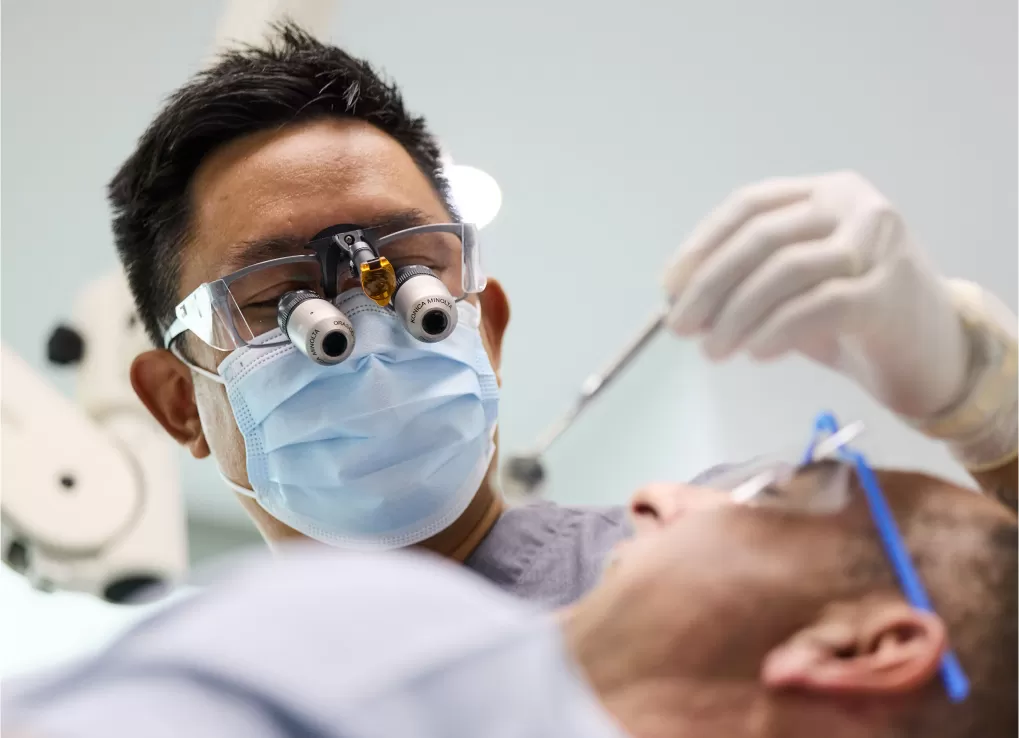
Your first visit is a detailed clinical examination and treatment plan discussion, where several options and scenarios will be presented. You will have the opportunity to discuss any specific concerns that you may have.
There will be a comprehensive assessment of your gum tissues, jaw structure, and general dental issues. The problem areas are investigated and discussed in relation to the rest of your mouth. If needed, 2-Dimentional or more complex 3-Dimensional xrays can be taken during this appointment to help identify any hidden problems.
Your medical status will be taken into account before recommending any particular treatments.
A complete periodontal examination utilises a small blunt probe to record and measure inflammation. This is placed between the teeth and gums to determine the location and severity of ‘pockets’ which are the key characteristic of periodontitis.
Other factors to assess include the extent of gum recession, teeth mobility and amount of bone loss.
When seeing Dr Jeremy Vo, patients can complete the examination with minimal discomfort.
Once the examination process is fully completed, a detailed consultation will then involve discussing with you why periodontitis developed in your gums and therefore look at ways to prevent future relapse. Different treatment strategies will then be discussed.
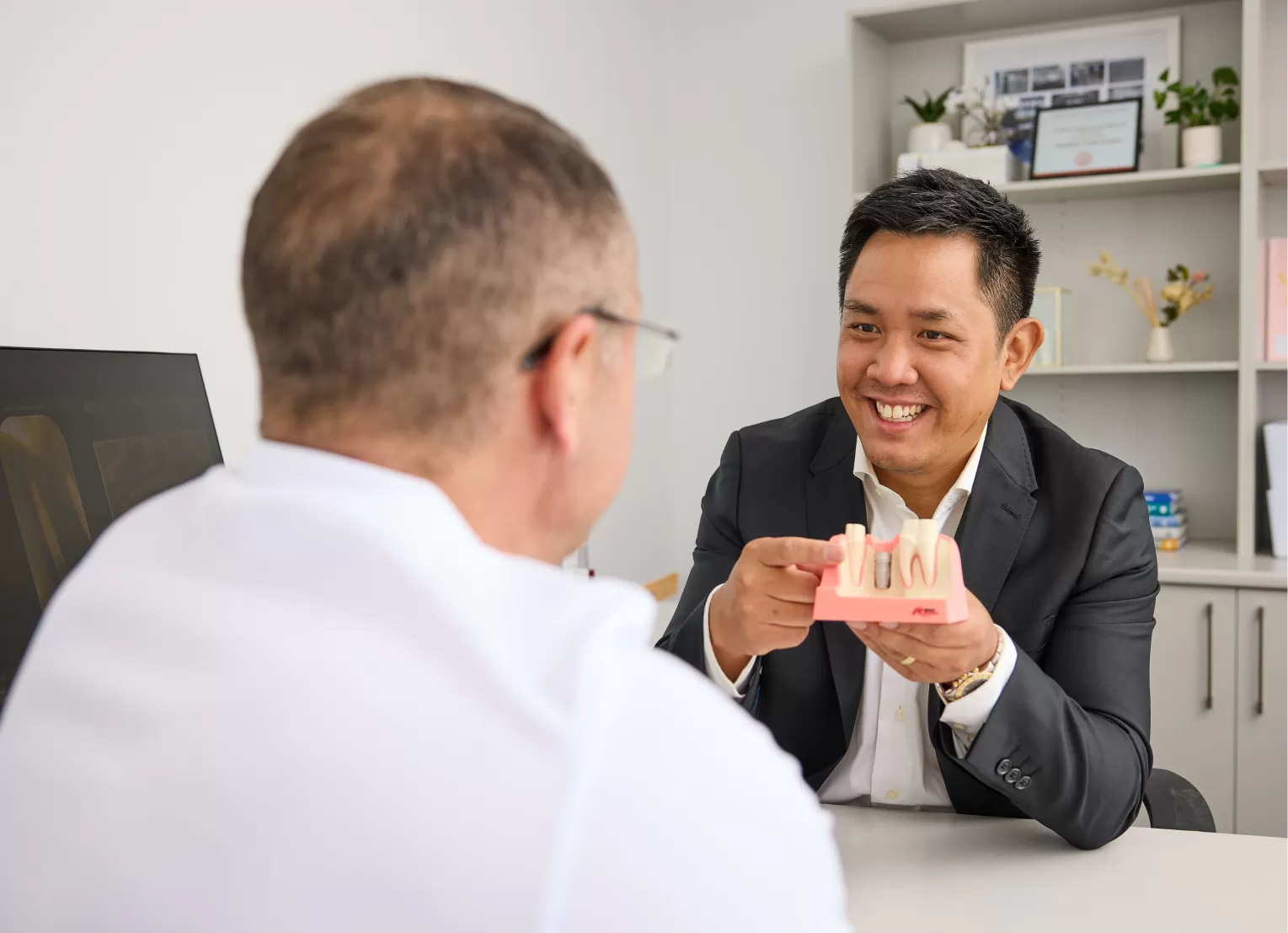
If you have missing teeth, or are about to lose teeth, then the replacement options will also be discussed prior to removing any teeth. Dental implants are possible even for patients with a history of gum disease provided it is done in the correct way.
Although many cases may present with no symptoms, some indications for treatment can include prolonged temperature sensitivity, spontaneous pain, tooth discoloration, tenderness of the tooth or surrounding gum tissue and swelling.
On a daily basis, our mouths are consistently harbouring bacteria. These bacteria form onto the surfaces of teeth and gums, and forms a sticky, furry layer. Brushing and flossing daily can remove plaque. However, once the bacteria remains on our teeth for a long time, bad bacteria begin to release toxins which cause the inflammation of the gums, known as gingivitis.
Fortunately, gingivitis is a mild form of gum disease which is completely reversible with daily cleaning. A professional clean can help to reduce bacteria further in areas which are inaccessible to home hygiene. This form of gum disease does not result in any loss of gum or bone tissue.
Although most people brush regularly, bacteria may remain sheltered from the toothbrush. This may commonly occur at hard to reach areas such as the molars, and especially the areas in between teeth. Over time, the plaque that is not removed, mineralizes and hardens into ‘tartar’. The bacterial deposits in its hardened form becomes more toxic and then causes irreversible damage to the gums and surrounding bone. If left untreated, teeth may eventually loosen and may require removal by this stage. Only professional cleaning from the dentist will remove tartar. Symptoms of periodontitis include:
However, not every person is equally susceptible to gum disease. Smoking, stress, family inheritance, diabetes, nutrition, genetic conditions and certain medications may cause increased risk of gum disease in an individual.

Periodontitis (also known as gum disease) results in the progressive destruction of supporting structures of teeth, which includes not only the gums, but additionally the supporting jaw bone.

Dental implants are artificially made teeth that are placed into the jaw that look, feel and perform like natural teeth. They can be used to replace one tooth, several teeth or a whole arch.

A gummy smile refers to a smile with excess display of the gums. This can lead to an unaesthetic smile. One such cause of a gummy smile is when the gums excessively grow over the teeth, leading to the appearance of small teeth.
We offer timely appointments to ensure you receive the care you need when you need it. From endodontics to periodontal therapy, our specialists manage every aspect of your dental health with expertise and comprehensive post-operative support.
Your smile is our priority—experience the difference with our specialist care today.
© 2025 Australian Dental Specialists | Privacy
Site by Luna Digital Marketing
