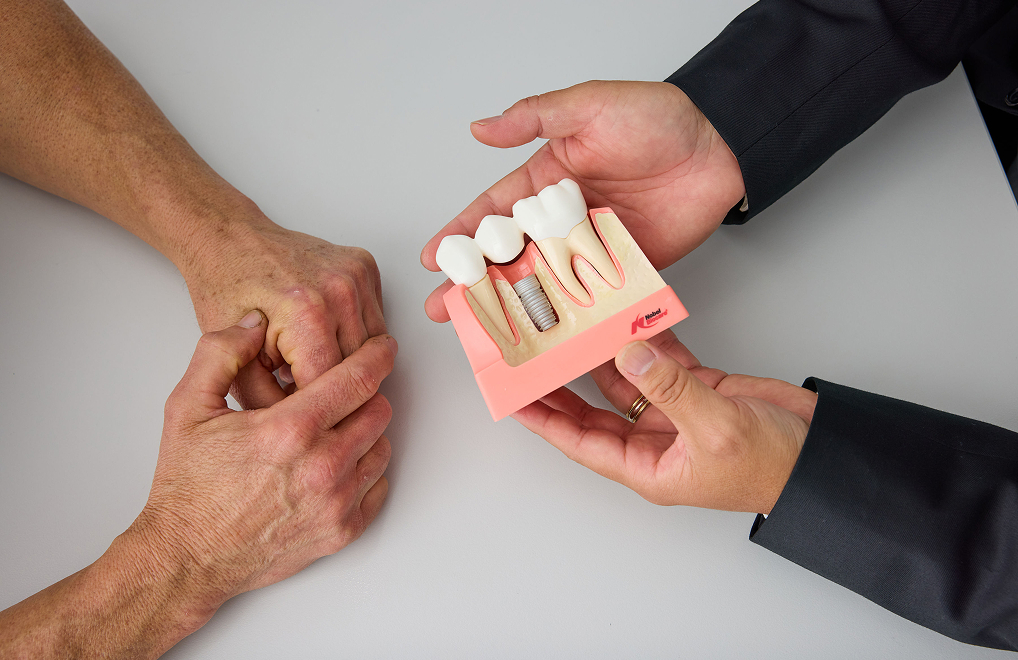
Dental implants are artificial teeth that are placed into the jaw, made to look, feel and perform like natural teeth. They are made of small titanium screws which are inserted into the jawbone where teeth are missing.
Dental implants replace the roots of missing teeth and are integrated with your jawbone to provide a firm foundation to support single crowns, large bridges and dentures.
Dental implants can be used to replace one tooth, several teeth or a whole arch.
As an alternative to dentures or bridgework, dental implants have a number of benefits:
If your gums are healthy and you have enough bone to hold the implant then you are a suitable candidate for dental implants.
Routine flossing, brushing twice daily and regular dental visits will ensure you have good oral hygiene so that plaque and calculus won’t develop.
If you have had radiation therapy to the head or neck area, smoke, have diabetes or heart disease, we recommend that you talk to your periodontist, who will be able to assess if dental implants are appropriate for you.

The mostly commonly used implant is the endosteal implant. This type of dental implant is shaped like a screw and placed deep within the jawbone, in the place of a tooth root. Acting as an artificial tooth root, endosteal implants adhere to your jawbone to provide a firm foundation for your new tooth replacement.
Endosteal implants are normally made of metal, ceramic or titanium, and tend to be used for patients with a wide or dense jaw.
Subperiosteal implants are another type of dental implant, attached above or on the bone, and underneath the gum tissue. This differs to an endosteal implant, which is inserted into the jawbone.
Subperiosteal implants are metallic and recommended for those with a shallow jawbone, or an insufficient amount of healthy jawbone for an endosteal implant.
If you have multiple missing teeth, fixed bridgework may be the best treatment option.
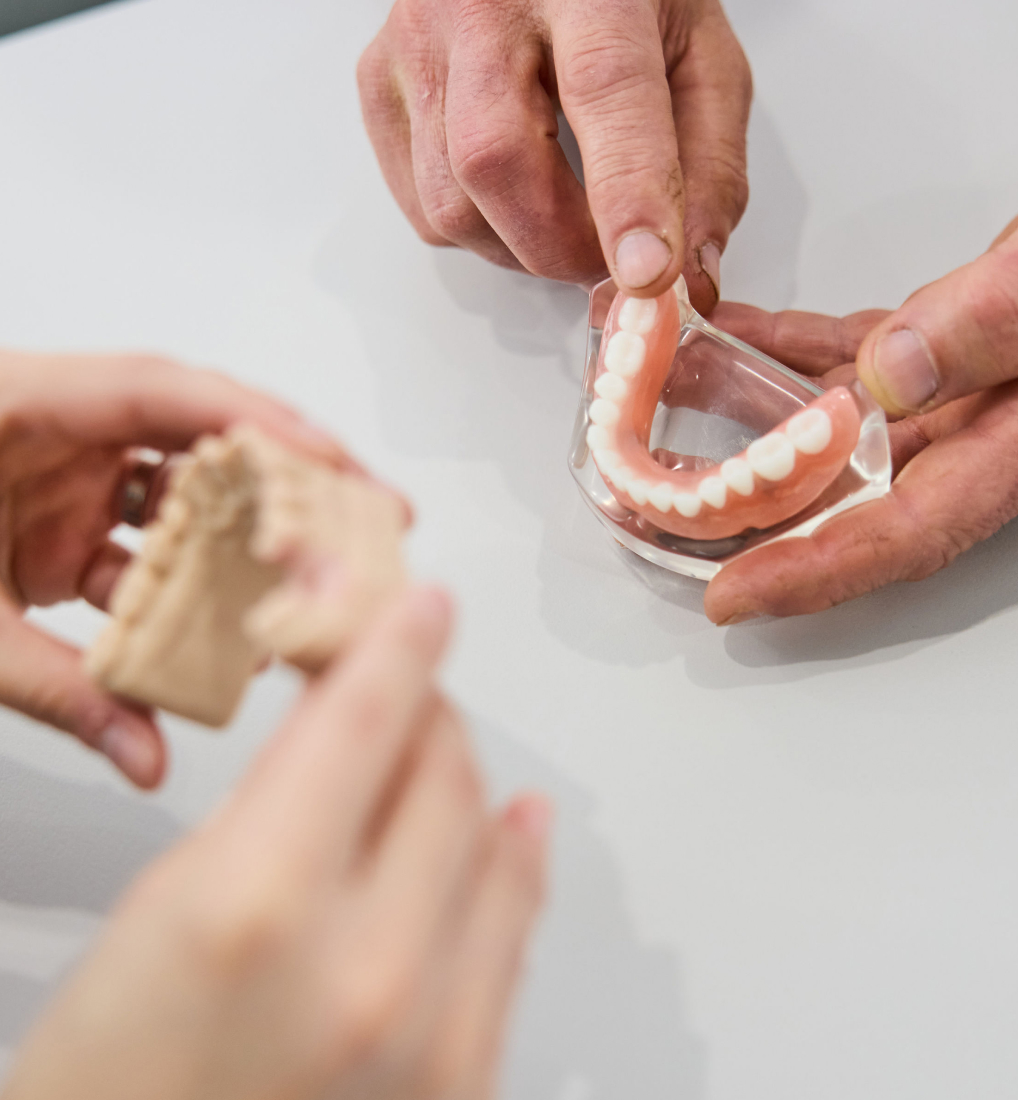
When installing a dental implant bridge, two or more dental implants will provide the support structure for a bridge made up of crowns and pontics (replacement teeth).
Dental implant bridges get rid of the need for a removable partial denture or a long-span conventional tooth bridge, providing an alternative that is functional and doesn't look out of place.
If you have severely damaged or irreparable teeth, or are missing all your teeth, a full-arch replacement could be hugely beneficial. A number of such treatment options - in which several replacement teeth are held up by a bedrock of implants - are available:
An implant-supported fixed prosthesis or a dental implant bridge may be a suitable treatment option if you require complete teeth replacement.
Dental implant bridges involve four or more dental implants used as pylons in support of a complete set of replacement teeth. Permanently fixed inside the mouth and unable to be removed on your own, implant-supported bridges are an aesthetic option that are just as functional and comfortable as regular teeth.
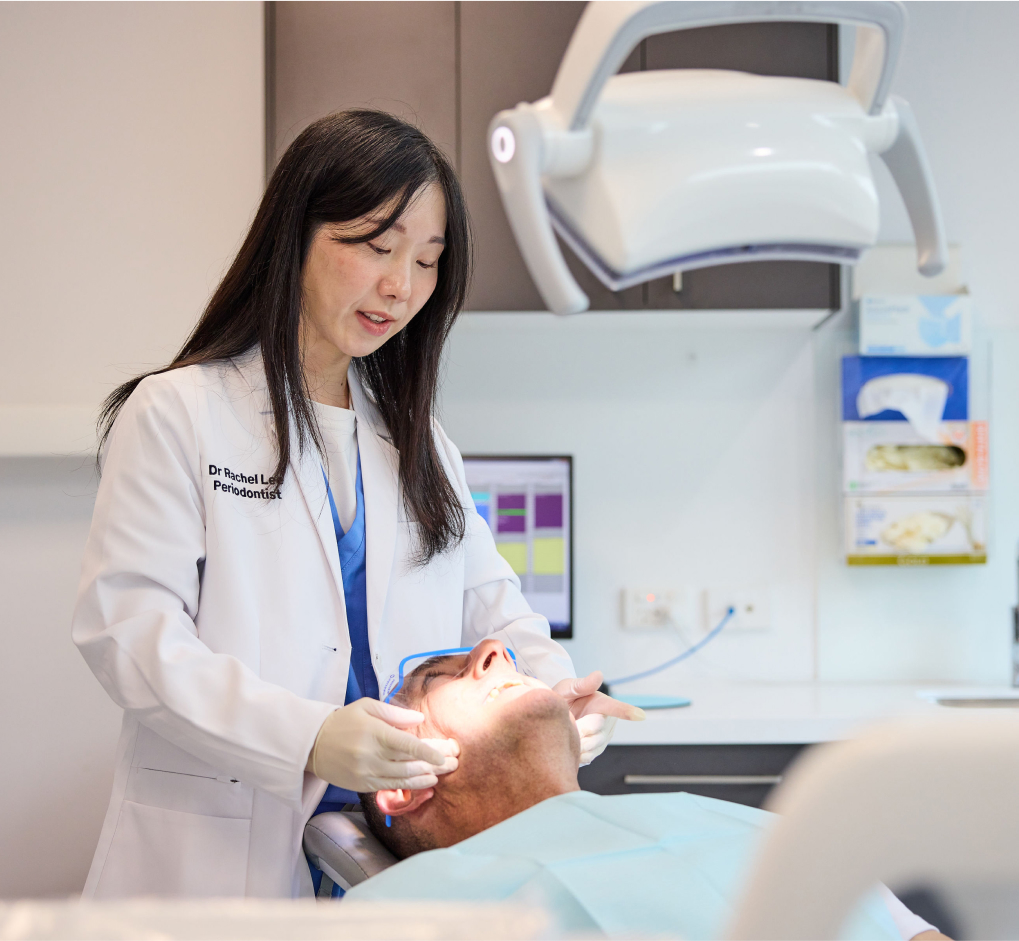
All-on-4 dental implants (sometimes mistakenly referred to as all-in-4) refer to a specific dental implant technique, in which a set of 4 implants replace the upper or lower set of teeth.
All-on 4 allows you to immediately replace your dentures while bypassing the prolonged procedure involved in installing regular implants. All-on-4 provides a full set of teeth that are identical to the look, feel and bite of natural teeth.
The new implants are placed into a high bone density area of the jaw known as the anterior maxilla, which enables them to be angled up to 45 degrees, enhancing the level of support while enabling patients with bone deficiencies or a lack of jawbone to forego any need for a costly bone grafting procedure prior to a conventional implant procedure.
As well as being cost-effective, the minimally invasive nature of the procedure makes the healing and recovery time for All-on-4 dental implants significantly shorter than regular implants or dentures.
There are five main steps in the dental implant process:
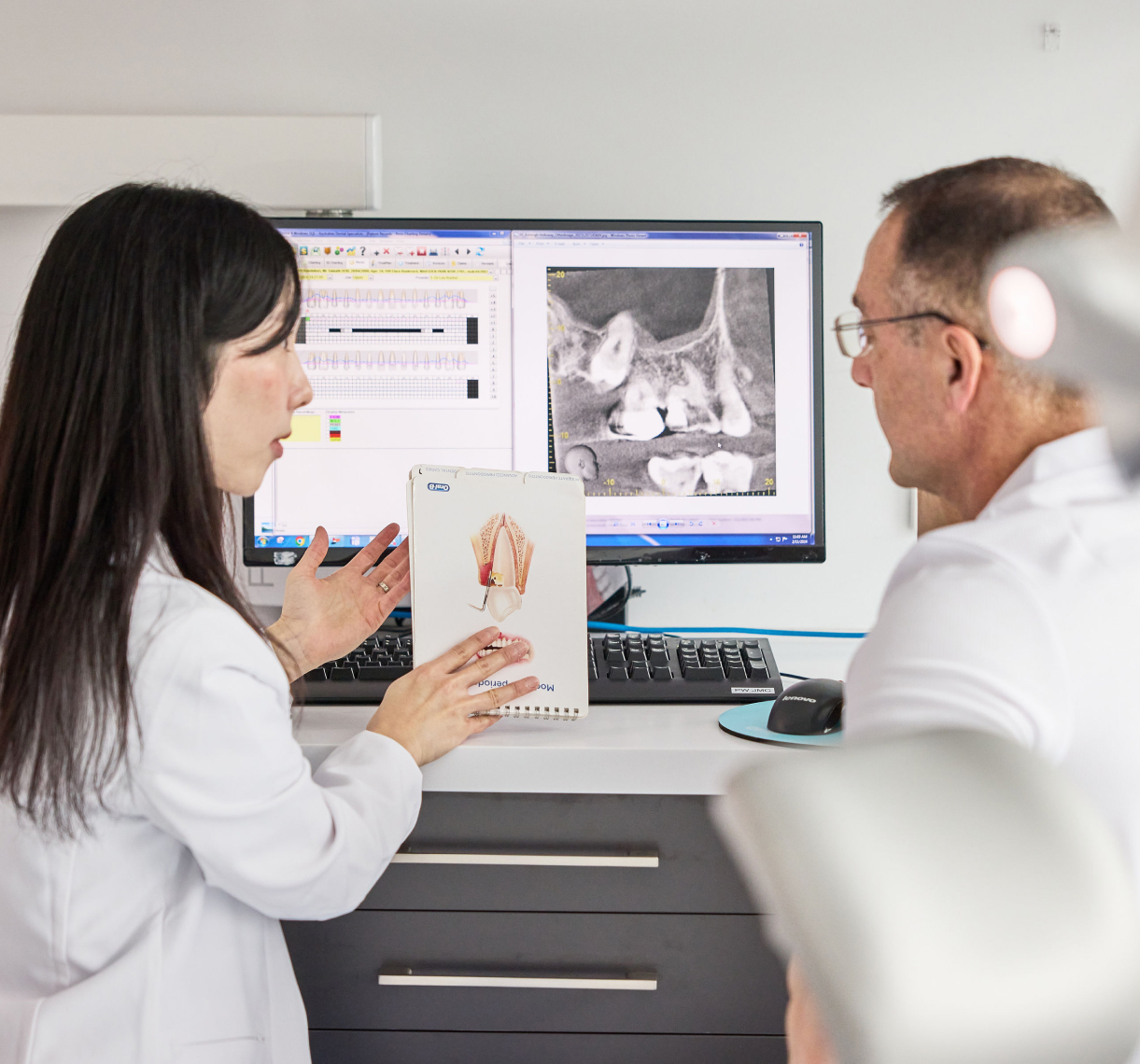
Implants consist of 3 components:
In some cases, instead of an artificial tooth, an implant can be fitted with special clips or attachments (similar to press-studs) to replace multiple teeth or hold a denture. Success rates for dental implants are high, at around 95%.
The overall implant process can take from 3 – 6 months and is performed over 2 or 3 stages.
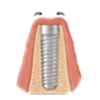
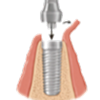
Once healed an impression for a post (abutment) is taken for the manufacturing of an implant crown.
Radiographs (x-rays) are also taken to ensure that the abutment will be placed correctly.
The recovery time after a dental implant surgery can vary based on a number of factors - primarily, the number of teeth needing replacement, whether you required bone or gum grafting, the condition of your jaw bone pre-surgery, and whether you require further surgeries.
Many people are able to go back to work the day after surgery - particularly if they have only had one or two teeth replaced. For larger procedures, however, you may feel more comfortable returning to regular activities between a few days and a few weeks after your surgery.
In general, the overall healing process can take between 3-6 months.

To look after your dental implants and keep them free of bacteria and plaque, it is important that you:
Plaque and calculus can lead to gum inflammation, infection and bleeding gums which may affect the stability of your implant
Properly maintained implants that are anchored by sufficient bone can last for many years, however like all other dental appliances some maintenance is required to prevent any damage to the crown or implant itself.
Regular check-ups (twice yearly) and cleans are important to ensure that plaque and calculus don’t develop on your natural teeth or your implant and to prevent gum inflammation.
As with any surgical or invasive procedure, dental implant surgery carries potential complications and risks, which may include:
While any such problems are rare and a dental implant procedure is generally considered safe, it is important to be aware of them and consult with your dentist before undergoing any treatment, as they will be able to provide you with detailed information on any potential side effects and ensure the surgery goes as smoothly as possible.
The amount you pay for a dental implant treatment depends on several factors, namely the type and extent of treatment required, the level of anaesthetic, location, and healthcare.
The cost of carrying out a dental implant will include each of the steps from the initial consultation through to the materials and instruments used.
Some patients manage their payment by spreading them out in instalments, and if you have private health insurance with 'major dental extras' included, you may also be eligible to claim part of the cost back.
Australian Dental Specialists aim to provide the highest quality treatment available - for a detailed estimate and to find a solution that suits you, don't hesitate to get in touch with us.
Unfortunately, Medicare does not cover some dental services, including dental implants, as it does other health services.
You may, however, be covered by private health insurance if you have an extras policy with 'major dental' included.
Virtually all teeth replacements available have some type of metal in the materials they are made of.
The titanium alloy that makes up the majority of dental implants is highly biocompatible, meaning an allergic reaction to it is highly unlikely.

Your first visit is a detailed clinical examination and treatment plan discussion, where several options and scenarios will be presented. You will have the opportunity to discuss any specific concerns that you may have.

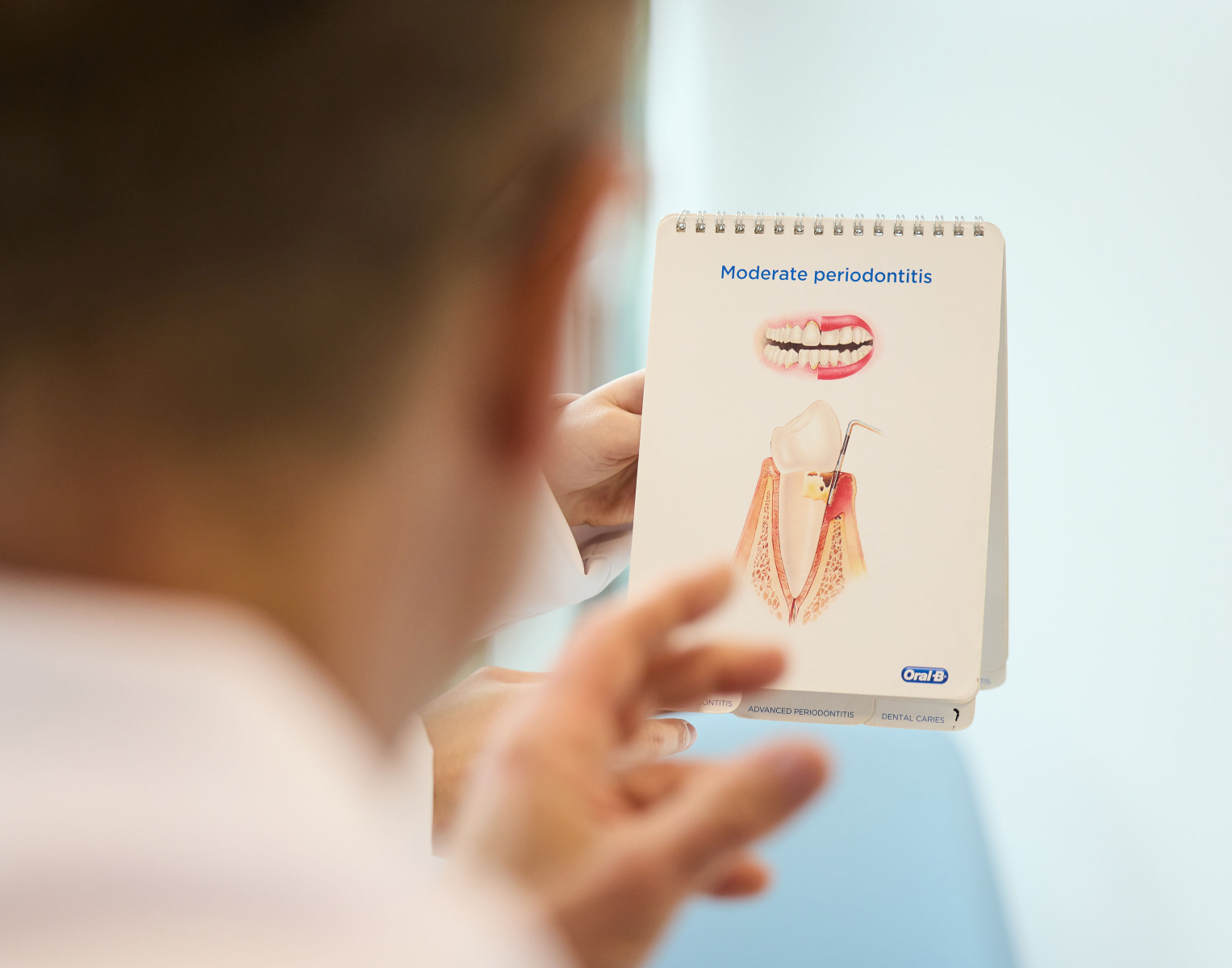
Periodontitis (also known as gum disease) results in the progressive destruction of supporting structures of teeth, which includes not only the gums, but additionally the supporting jaw bone.

A gummy smile refers to a smile with excess display of the gums. This can lead to an unaesthetic smile. One such cause of a gummy smile is when the gums excessively grow over the teeth, leading to the appearance of small teeth.
We offer timely appointments to ensure you receive the care you need when you need it. From endodontics to periodontal therapy, our specialists manage every aspect of your dental health with expertise and comprehensive post-operative support.
Your smile is our priority—experience the difference with our specialist care today.
© 2025 Australian Dental Specialists | Privacy
Site by Luna Digital Marketing
